Aspirin for preventing heart attack and stroke - jury is still out and it can be very risky! |
|
Aspirin has been around for a long time - it was
listed in the Egyptian pharmacopeia. The worst risk of even low dosage
aspirin is that of a brain bleed from which there is a only a 20% survival
rate. That alone, is enough to make me feel, it's not worth the
risk. Seems tantamount to playing Russian Roulette to stop a
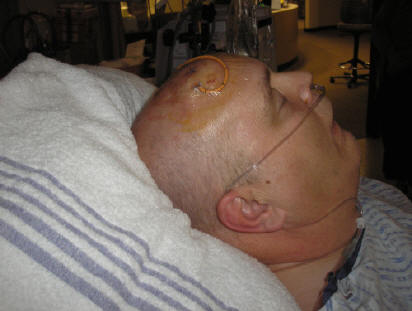
headache. Below is my hubby who got a brain bleed from the daily aspirin.
He survived but had to have a shunt inserted.
Many articles tell people to take a low dose aspirin every day to help prevent stroke and no risks are given. An article on the AARP website states that aspirin may reduce the risk of prostate cancer, by 6%. Doctors should not routinely give aspirin to people with diabetes to help guard against a heart attack or stroke, a British study found in 2008. Another study found while it didn't help prevent a FIRST heart attack or stroke it was appropriate for those who have had a heart attack or stroke to possibly prevent a second heart attack or stroke. What aspirin supposedly does is thin the blood so that if a clot is in a major artery or vein, thinner blood might get through. The use of "aspirin therapy" is really pretty unproven except for huge epidemiological studies which are known to be inaccurate (but the numbers of the cohort are impressive to the public). The idea is that taking a 70 mg aspirin every night won't hurt you and it might help you. However, the Bayer company admitted in a C.M.E. (that's a course for medical providers where they tell the facts they don't tell the patient) that taking even low dose aspirin is not without its risks. 1 patient in 5000 gets a brain bleed or hemorrhagic stroke. 1 in 1000 patients gets a severe gastro-intestinal bleed. Additionally it's well known that aspirin also interferes with the protective coating cells produce to prevent ulcers from forming from stomach acid. Medical providers must be aware of this because when a friend of ours got a brain bleed with NO other risk factors, he was told to stop taking the nightly low dose aspirin. It should be noted that taking reasonable amounts of Vitamin E also thins the blood without the risks of aspirin. |